
If you’ve ever stood atop a utility pole in the middle of a Texas thunderstorm, with the wind howling and the lines buzzing like a nest of angry hornets, you know one thing for certain: your gear isn’t just “equipment.” It’s your insurance policy. Out here, we don’t just “go to work.” we step into a high-stakes environment where the difference between a successful shift and a life-altering accident often comes down to what’s strapped to your feet.
When we talk about lineman equipment, we usually start with the big stuff-the bucket trucks, the hot sticks, and the gaffs. But let’s get real for a second. Your connection to the world (and the voltage) starts at the ground. Choosing the right Safety Boots isn’t just about looking the part; it’s about understanding the invisible dance between electricity and the earth.
The Science of Staying Un-Grounded (In a Good Way)
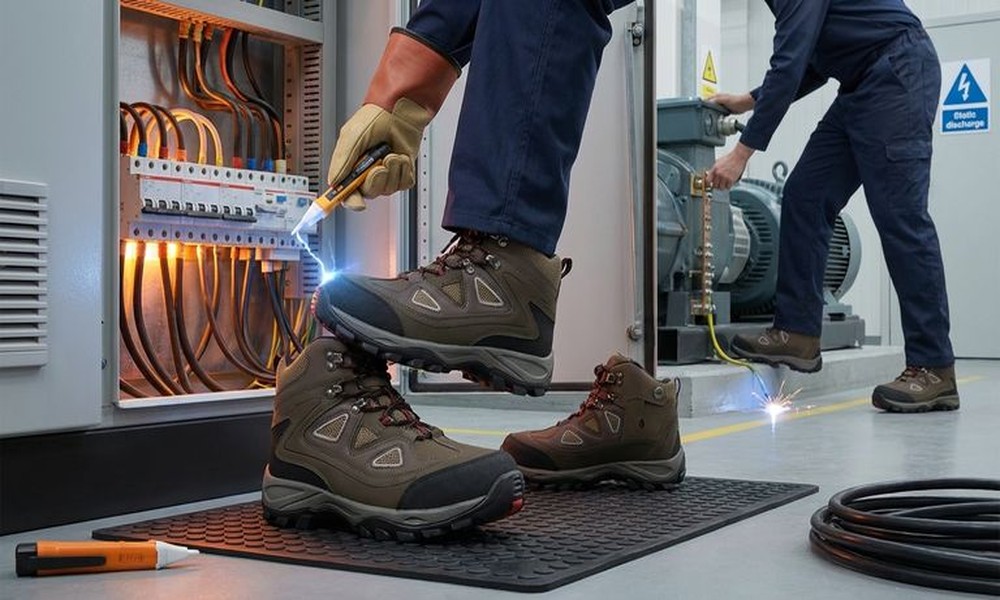
In the world of high-voltage power, “grounding” is usually a safety term. But for a human body, becoming the path to ground is a nightmare scenario. That’s where Electrical Hazard free boots come into play. These aren’t your average department store work shoes.
Standard Safety Boots might have a steel toe to protect you from a falling transformer, but true lineman boots are rated to withstand thousands of volts of electricity. The ASTM F2413-18 standard is the gold medalist here. This rating ensures that the footwear can withstand 18,000 volts at 60 Hertz for one minute, with no current flow or leakage in excess of 1.0 milliampere.
Think of your climbing boots as a portable insulator. Just like the rubber blankets we drape over live wires, the Rubber sole on your boot acts as a barrier, preventing electricity from completing its circuit through your body. Is it a 100% guarantee? Nothing in this industry is. But it’s the best damn line of defense you’ve got when things go sideways.
Climbing the Wood: Why You Need a Lineman Boots with Steel Shank
If you’re a “wood walker,” you know the physical toll of the climb. When you’re spiked into a pole, your entire body weight is concentrated on a thin metal stirrup. This is where most boots fail, but it’s where lineman boots with steel shank construction shine.
Why a steel shank? Imagine trying to balance on a tightrope while wearing sneakers. Your arches would collapse in minutes. A high-quality lineman pole climbing boot uses a reinforced, extra-wide steel shank to create a rigid platform. This doesn’t just prevent foot fatigue; it protects the structural integrity of the boot. Without that steel backbone, the pressure from the gaffs would tear a standard Rubber sole to shreds.
Moreover, that shank helps distribute your weight across the entire footbed. When you’re 40 feet up, hanging off a belt and reaching for your Lineman’s Pliers or a Skinning Knife, you need a stable base. If your feet are screaming in pain, your focus shifts from the live wire in front of you to the ache in your arches-and in this job, a lack of focus is lethal.
The Daily Grind: Tools, Tension, and Toughness
A day in the life of a lineman involves a lot more than just standing around. We are mechanics, carpenters, and electricians all rolled into one. Your climbing boots have to keep up with a variety of specialized hand tools that we use every single day:
- The Kleins (Side-Cutting Pliers): Used for everything from cutting heavy-gauge wire to gripping bolts.
- Wrench Sets: Often used for tightening hardware on crossarms.
- The “Bug” Wrench: Specifically designed for tightening connectors.
- The Hammer: Because sometimes, things just need a little “persuasion” to fit into place.
Every time you lean, reach, or pull with these tools, you are putting torque on your ankles. This is why lineman climbing boots feature a high shaft (often 10 to 16 inches). This height provides the lateral support necessary to keep your ankles from rolling while you’re maneuvering around hardware and heavy lines.
Fighting Foot Fatigue: The Invisible Enemy
We’ve all been there-the 16-hour storm shift. When the rain is sideways and the whole county is dark, you don’t have time to think about your feet. However, foot fatigue is one of the leading contributors to workplace accidents. According to safety studies in the utility sector, tired workers make more “short-cut” decisions.
High-quality Lineman Climbing Gear is designed to mitigate this. By combining a shock-absorbing Rubber sole with an ergonomic footbed, these boots reduce the vibration and impact of walking on uneven terrain. Whether you’re trudging through a muddy ditch or standing on a concrete pad, the right Safety Boots act like a suspension system for your skeleton.
The Grounding Reality: Keeping the Potential at Zero
While your Electrical Hazard free boots provide that crucial barrier between you and the earth, they are just one part of a much larger safety equation. In the high-voltage world, we don’t just rely on insulation; we rely on grounding equipment to create a “Zone of Protection.” Before any work begins on a de-energized line, we use personal protective grounds-heavy-duty copper cables with specialized clamps-to bond the lines to the earth.
This ensures that if a line is accidentally re-energized or struck by lightning, the current has a low-resistance path to the ground that bypasses the worker. Much like how a lineman boots with a steel shank provides a solid physical foundation, grounding sets provide an electrical foundation. When you combine these grounds with your Safety Boots, you’re effectively ensuring that you and the hardware you’re touching stay at the same electrical potential. It’s the ultimate “safety net” that turns a potentially fatal mistake into a tripped breaker.
Maintenance: Don’t Let Your Gear Fail You
You wouldn’t leave your hot stick in a puddle of oil, so why neglect your boots? For Electrical Hazard free boots to work, they have to stay clean and dry. Mud, grease, and even metallic shavings can “bridge” the gap across the sole, creating a path for electricity to travel.
Inspect your lineman climbing boots every morning. Look for:
1. Cracks in the Rubber sole: Any breach can compromise the EH rating.
2. Exposed Steel: If your steel toe is showing through the leather, it can become a conductor.
3. Worn Treads: Slipping on a wet rung or a greasy truck step is a fast way to end a career.
Conclusion
At the end of the day, being a lineman is about respect-respect for the power on the lines and respect for the tools that keep you safe. Your lineman equipment is an extension of yourself. From the lineman boots with steel shank that support your climb to the Rubber sole that keeps you isolated from disaster, every piece of gear has a job to do.
Don’t skimp on your foundation. Invest in quality lineman pole climbing boots, keep them maintained, and they’ll keep you standing tall until the last light is back on. Stay safe out there, hands.
FAQs
1. What does the “EH” rating on my boots actually mean? The EH (Electrical Hazard) rating means the boot is designed to provide a secondary source of protection against accidental contact with live electrical circuits. It’s tested to withstand 18,000 volts under dry conditions.
2. Can I use steel-toed boots for electrical work? Yes, as long as they are EH-rated. In EH boots, the steel toe is fully encased in non-conductive material and the boot’s construction prevents the steel from creating an electrical bridge.
3. Why do lineman boots have such high heels? The “logger” or “lineman” heel (usually 2 inches) is designed to hook onto the rungs of a ladder or the stirrup of a climbing gaff. This prevents your foot from slipping forward or backward while you’re suspended.
4. How often should I replace my climbing boots? It depends on the wear, but for a full-time lineman, every 12 to 18 months is standard. If you see the sole thinning or the leather cracking, replace them immediately. Your safety is worth more than the cost of new boots.
5. Are rubber soles better than polyurethane? For electrical environments, rubber is often preferred because of its natural insulating properties and its superior grip on wet or oily surfaces, which is crucial for preventing falls in the field.