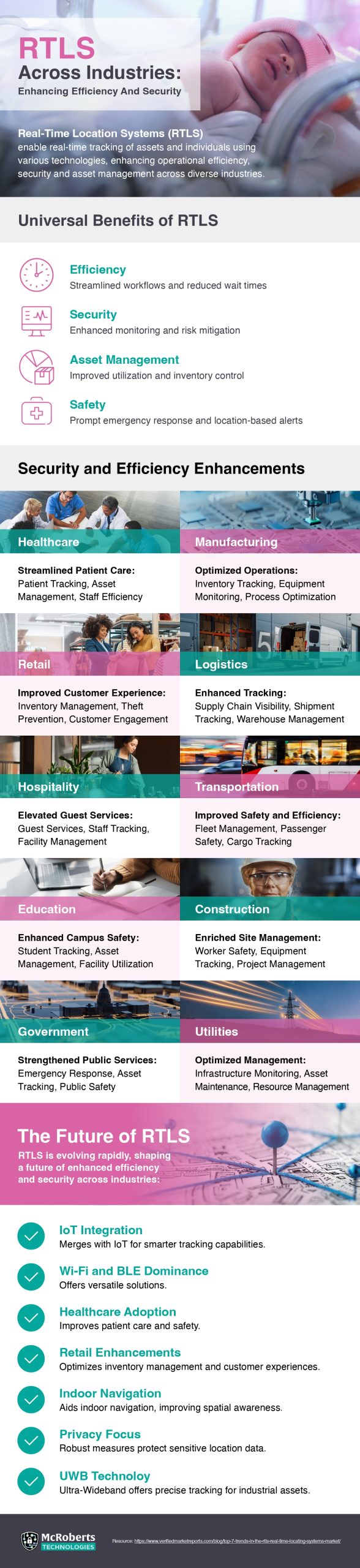
Real-Time Locating Systems (RTLS) are transforming asset management and personnel monitoring across various sectors, including healthcare, manufacturing, retail, and logistics. By boosting operational efficiency and security, RTLS offers considerable advantages. This article delves into the impact of RTLS, its benefits, and future trends.
RTLS allows organizations to track and monitor assets and individuals in real time using technologies such as RFID, Bluetooth, and GPS. This capability provides essential insights into asset location, movement, and usage, aiding in streamlining workflows, enhancing security, and optimizing resources.
A significant advantage of RTLS is heightened efficiency. By accurately tracking assets and personnel, organizations can improve workflows, reduce wait times, and minimize downtime. For example, in healthcare, RTLS aids in monitoring medical equipment, managing patient flow, and improving staff efficiency. In manufacturing, RTLS supports real-time inventory management, equipment monitoring, and process optimization, thereby enhancing productivity and reducing costs. The inclusion of an infant security system in hospitals is another vital application, ensuring the safety of newborns.
Additionally, RTLS bolsters security across industries. Real-time location data enables organizations to oversee assets and staff, identify potential security threats, and respond swiftly to emergencies. In retail, RTLS helps deter theft by tracking product movements and alerting staff to suspicious activities. In logistics, RTLS improves supply chain visibility, shipment tracking, and warehouse management, reducing the risk of lost or stolen goods.
Looking ahead, several trends are shaping the development of RTLS. One significant trend is the integration of RTLS with the Internet of Things (IoT), enhancing tracking capabilities and creating smarter ecosystems. Wi-Fi and Bluetooth Low Energy (BLE) technologies are also gaining popularity in RTLS, offering cost-effective and flexible tracking solutions.
Furthermore, RTLS adoption is expected to rise, especially due to the COVID-19 pandemic, which has increased the need for patient monitoring and safety. In retail, RTLS is projected to improve customer experiences, inventory management, and store operations.
Data privacy and security are crucial considerations in RTLS implementations. As organizations gather vast amounts of location data, they must implement robust measures to protect sensitive information and comply with data protection regulations.
Technologies like Ultra-Wideband (UWB) are also enhancing RTLS by providing high-precision tracking solutions ideal for industrial asset management.
For more insights on how RTLS is enhancing efficiency and security across various industries, please refer to the accompanying graphic.